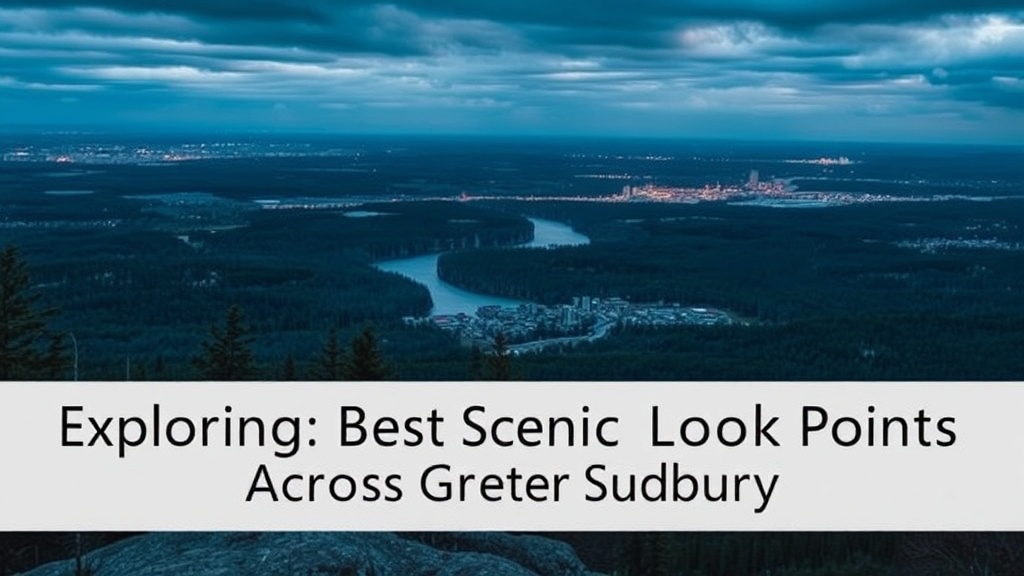
Exploring the Best Scenic Lookout Points Across Greater Sudbury

A hiker stands at the edge of a granite ridge, watching the sun dip below the jagged silhouette of the Canadian Shield. The light turns the surface of the water below into a sheet of hammered gold, and for a moment, the wind stops entirely. This isn't the manicured view of a park in Southern Ontario; this is the raw, unyielding beauty of the North, where the landscape feels both ancient and alive.
Greater Sudbury is often characterized by its industrial grit, but the true soul of the city lies in its elevation. We are a city built on the Precambrian Shield, a geological foundation that provides us with some of the most dramatic verticality in Northern Ontario. Whether you are looking for a quick photo op during a lunch break or a grueling trek to a summit, the lookout points in our region offer varying degrees of accessibility and reward. This guide categorizes these locations by effort and experience to help you plan your next excursion effectively.
The Accessible Classics: Low Effort, High Reward
Not every scenic excursion requires a multi-hour trek or heavy-duty hiking boots. Some of the most iconic views in the city are available just a short walk from a parking lot, making them perfect for families or those looking for a quick mental reset.
Ramsey Lake Waterfront
While often viewed as a central urban park, the perimeter of Ramsey Lake offers several elevated vantage points, particularly near the Bell Park area. The way the light hits the water during the "blue hour" provides a serene view of the downtown skyline reflected in the lake. It is an ideal spot for a casual stroll. If you are planning a social gathering here, you might want to check out tips on how to plan the perfect summer picnic at Ramsey Lake to ensure you have the right gear for a comfortable afternoon by the water.
The Laurentian University Escarpment
The rolling hills surrounding Laurentian University provide several natural overlooks. The paths are generally well-maintained, and the elevation changes are moderate. During the autumn, the deciduous trees provide a vibrant canopy of oranges and reds that contrast sharply with the dark granite outcrops. This is a prime location for amateur landscape photographers looking to capture the transition of seasons without leaving the city limits.
The Intermediate Treks: Preparation is Key
These locations require a bit more cardiovascular endurance and appropriate footwear. You will encounter more significant elevation gains and potentially uneven terrain consisting of roots and loose stones.
Camp Darwin Lookout
Camp Darwin is a staple for local outdoor enthusiasts. The trails here are well-marked, but the elevation changes can be deceptive. To reach the higher viewpoints, you should prepare for a steady incline. It is highly recommended to wear high-traction footwear, such as Merrell Moab hiking boots or Salomon trail shoes, to navigate the rocky sections safely. Because the weather in the North can shift rapidly, even in the summer, always carry a lightweight windbreaker. If you are planning to visit during the colder months, knowing how to plan the perfect winter hike at Camp Darwin is essential for safety and enjoyment.
The Kivi Park Scenic Overlooks
Located a short drive from the city core, Kivi Park offers a more rugged experience. The lookout points here offer a view of the vast, unpopulated wilderness that defines the Sudbury District. The terrain is significantly more technical than the urban parks, involving significant granite slabs. When visiting, ensure you have a topographical map or a reliable GPS app like AllTrails, as the trail markings can occasionally be obscured by dense undergrowth.
The Advanced Summits: For the True Adventurer
These locations are for those who seek isolation and a physical challenge. These are not mere strolls; they are expeditions that require mental fortitude and physical preparation.
The Nickel Rim Loop
The Nickel Rim Loop is a quintessential Northern Ontario experience. The trail takes you through diverse ecosystems, from dense forests to open rocky outcrops. The high points of the loop offer sweeping views of the surrounding bush and the distant mining operations that define our skyline. This is a long-distance hike, so hydration is non-negotiable. Carry a Nalgene bottle or a hydration bladder with at least two liters of water. The terrain is notoriously rocky, so trekking poles are highly recommended to save your knees on the descent.
The Laurentian Highlands (Greater Sudbury Perimeter)
Beyond the immediate city limits, the highlands offer several unnamed summits that are accessible via established bush trails. These points offer a 360-degree view of the horizon, often allowing you to see the curvature of the earth on a clear day. These areas are more remote and require a high level of situational awareness. Always check the Ontario Parks website for any seasonal closures or fire bans before heading out, as these areas are prone to forest fire risks during the dry summer months.
Essential Gear for Northern Lookouts
To enjoy these vistas properly, you cannot simply show up in flip-flops. The Northern landscape demands respect and the right equipment. Use this checklist to ensure you are prepared for any of the locations mentioned above.
- Footwear: Mid-cut hiking boots with a Vibram sole are the gold standard for the rocky terrain found in Sudbury.
- Layers: Even in July, the temperature at a summit can be 5-10 degrees lower than at the trailhead. Bring a moisture-wicking base layer (avoid cotton) and a light fleece.
- Navigation: Do not rely solely on your smartphone's cellular signal. Many of these lookouts are in "dead zones." Carry a physical map or a dedicated GPS device like a Garmin.
- Hydration/Nutrition: High-protein snacks and plenty of water are vital. The elevation gain can lead to unexpected fatigue.
- Sun Protection: The UV index can be deceptively high on the exposed granite of the Shield. Use a broad-spectrum sunscreen and a wide-brimmed hat.
Seasonal Variations: What to Expect
The experience of a lookout changes entirely depending on the month. Understanding these cycles will help you choose the right time for your visit.
Spring: The Mud and the Melt
Spring in Sudbury is a season of transition. Many of the higher lookouts will still have patches of snow or "honey buckets" of melting ice. Trails can be extremely muddy and slippery. If you are visiting in late April or May, prioritize the lower-elevation paths like the Ramsey Lake waterfront to avoid getting stuck in the mud.
Summer: The Lush Canopy
This is the peak season for visibility and greenery. The forests are thick, and the lakes are a brilliant blue. However, this is also the time of year when black flies and mosquitoes are most active. If you are heading to a lookout like the Nickel Rim Loop, bring a high-quality insect repellent containing DEET or Picaridin.
Autumn: The Golden Hour
Autumn is arguably the best time for photography in Greater Sudbury. The color change in the maples and birches creates a spectacular backdrop for any lookout. The air is crisp, and the visibility is often at its highest, making it the best time to see distant landmarks. Be aware that the ground becomes much harder and more brittle, so ensure your boots have good grip for the dry leaves.
Winter: The Frozen Majesty
Winter transforms the lookouts into a white wonderland, but it also increases the danger significantly. Ice can make even the most basic granite slab a skating rink. If you are heading out to Camp Darwin or any higher elevation in the winter, you must use microspikes or snowshoes. The wind chill at the top of a ridge can be lethal if you are not dressed in professional-grade thermal gear.
"The North does not give up its beauty easily. You have to work for it, but once you reach that summit, the silence and the view make every step worth it."
Greater Sudbury is more than just a stop on the Trans-Canada Highway. It is a collection of peaks, lakes, and ridges that demand your attention. By choosing the right location based on your skill level and preparing with the correct gear, you can move beyond the "frozen wasteland" myth and truly experience the grandeur of the Canadian Shield.